Making an Impact, One Dog at a Time
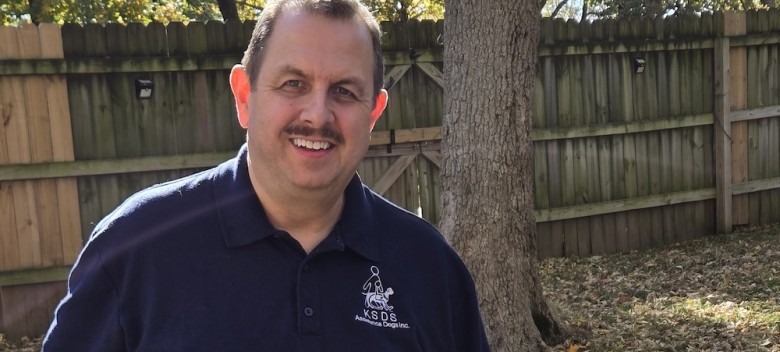
For nearly 20 years Brian Hesse, ’93, ’96 MBA, has welcomed adorable puppies into his home, loved them, showed them the world and then said goodbye to them after about a year and a half. Hesse doesn’t have attachment issues, he’s a volunteer puppy raiser for KSDS Assistance Dogs Inc.
His current companion, Mystique, is the seventh dog he has raised for the organization and his first golden retriever. He receives the puppies when they are about eight weeks old and works for the next 16 months to socialize them for situations they may encounter in everyday life and to teach them 30 to 40 commands.
In addition to the standard tasks of turning lights off and on and opening doors, Mystique displayed a talent for taking off her human’s socks, so that has been incorporated into her training, taking advantage of the dog’s innate inclinations. In addition, Hesse says, the dogs are taught to go to the bathroom on command to accommodate the lifestyle of a future companion who may have mobility issues.
Hesse says one thing he likes about the organization is that they donate their service animals to those in need free of charge. If Mystique is able to graduate from Puppy College, meaning that she’s among the approximately 70% of dogs who are not declined due to physical issues, she will be assigned to one of three tracks for further training: guide dogs, who serve people with vision problems; service dogs, who serve people with mobility issues; or facility dogs, who work with able-bodied people in places such as the court system, schools, occupational therapy settings and other situations where humans could benefit from the calming presence of an animal.
Hesse says the most common question he gets is, “Don’t you get attached?” Although attachment is necessary for the dog to learn, Hesse says he’s come to enjoy attending graduation day and meeting the dog’s new forever companion.
“When you get to see how they're making an impact on someone's life, any tear becomes joy. It gets easier as you do more dogs because you go into it knowing exactly what to expect.”